OTELSAN • PRODUCT COLLECTION
Minibars
Detailed information about the collection.
Hotel-Style Minibars: Professional Cooling, Comfort, and Design Solutions
In modern accommodation facilities, one of the most important in-room amenities that complements the guest experience is the hotel-style minibar . Providing guests with easy access to beverages and conveniently stored snacks, minibar systems also enhance the functionality and service standards of hotel rooms.
OTELSAN minibar collectionIt brings together minibar models with different cooling technologies, capacities and design features for hotels, resorts, boutique accommodations, residences and professional hospitality projects.
Our collection includes minibars with absorption systems, Peltier technology, inverter compressors, and Ekovat systems, as well as Platinum series, retro-designed, and drawer-type options. This variety allows hotels to develop solutions tailored to their room concepts, technical infrastructure, operating budget, and daily usage needs.
When choosing a professional minibar, not only the product's appearance or capacity should be considered, but also its energy consumption, operating noise level, cooling performance, ventilation requirements, and compatibility with existing furniture. OTELSANIt helps determine the right equipment by offering product options tailored to the needs of different hotel projects.
Why are professional hotel minibars important?
A minibar in a hotel room is more than just a small cooling device. As part of the in-room amenities service, this equipment creates a service area tailored to guests' daily habits.
For guests, especially business travelers, extended-stay visitors, and those opting for premium room service, easy access to beverages is a significant comfort factor.
For hotel businesses, minibar selection can have an impact on equipment standardization, electricity consumption, maintenance planning, and housekeeping operations.
In facilities where numerous rooms are equipped with the same equipment, selecting the right products should consider not only the initial purchase cost but also the operating expenses that may arise throughout the lifespan of the devices.
OTELSAN Professional Minibar Systems
While different minibar technologies serve the same purpose, they differ in their operating principles and technical performance. Therefore, the advantages, usage conditions, and limitations of each system should be carefully evaluated.
1. Absorption System Minibars
Absorption system minibars utilize a cooling cycle powered by thermal energy instead of a mechanical compressor. This technology is particularly suitable for accommodations where compressor-related operating noise and vibration are undesirable.
OTELSAN The collection includes absorption system minibars from the DR and DRC series, as well as Eco series models with different capacities and door designs.
Product options include designs with block doors and glass doors. Some models also offer All Black Edition options with a completely black body and door design.
One of the key features of absorption cooling systems is that they do not contain a mechanical compressor. However, energy consumption and cooling performance vary depending on the model. It should not be assumed that absorption systems consume less electricity than compressor-based models under all circumstances.
When selecting a product in this range, daily energy consumption, ambient temperature conditions, cabinet interior temperature values, and ventilation characteristics of the installation area should be evaluated.
2. Minibars with Inverter Compressors
Minibars with inverter compressors consist of systems where the compressor operating speed can be controlled according to the cooling needs. This technology helps to manage cooling performance and electricity consumption in a balanced way under appropriate design and usage conditions.
OTELSAN The product portfolio includes the INV-M and INV-MC series, as well as inverter minibar options with different door and body designs.
Inverter technology can be particularly useful in projects where controlled temperature management and cooling performance under varying environmental conditions are important.
For example, the INV-MC45 All Black Edition model's specifications state a 45-liter capacity and a noise level of 26–29 dB. These values are specific to that model; they do not mean that all inverter minibars have the same performance.
In minibars with inverter systems, noise level, energy consumption, and cooling capacity should be compared on a product-by-product basis. When evaluating different technologies, it is recommended to use energy consumption data based on standard test conditions, rather than just instantaneous power values.
3. Peltier Series Minibars
Peltier minibars are systems that operate on the principle of thermoelectric cooling. In this technology, electrical energy is used to create a temperature difference between the two surfaces of a semiconductor element.
The absence of a mechanical compressor is a key structural feature of Peltier systems. However, since the fans used for heat transfer can generate operating noise, not all models should be considered completely silent.
OTELSAN The Peltier range includes block-door and glass-door minibar models with varying gross volumes.
For example, the SM401-TH model is specified to have a gross volume of 38 liters, electronic thermostat control, LED interior lighting, and automatic defrost features.
In Peltier technology products, cooling performance can be affected by ambient temperature. The operating conditions of models intended for use in hot climates or furniture compartments with inadequate ventilation should be carefully considered.
4. Platinum Series Minibars
Platinum Series Minibars, OTELSAN It is one of the product families offered in the collection with different door designs and capacities.
The series includes models with block doors and glass doors. Different products may include user-friendly features such as electronic thermostat control, LED lighting, and automatic defrost.
Certain models in the Platinum series utilize Peltier cooling technology. Therefore, the term "Platinum" should not be considered a separate cooling technology in itself, but rather a name that defines the product series.
For example, the SM601 Platinum series model specifies a gross volume of 54 liters and electronic thermostat control.
This product line can be considered by businesses looking for capacity options to suit different room sizes and beverage serving needs.
5. Ekovat System Minibars
Ekovat System Minibars, OTELSAN The product collection consists of professional cooling solutions offered with different housing designs and control features.
This group includes inverter models from the MBA series and special placement options such as the MWH20 wall-mounted minibar.
Certain models include features such as sensor-activated LED interior lighting, adjustable shelving systems, reversible door direction, sleep mode, and an optional lock.
Control features may vary depending on the product model. For example, the timer function is offered in certain RTC models, while the sleep mode is offered in specific inverter models.
When evaluating models with ecovat systems, the product's actual cooling technology, capacity, dimensions, operating temperatures, and energy consumption should be considered together.
6. Retro Style Minibars
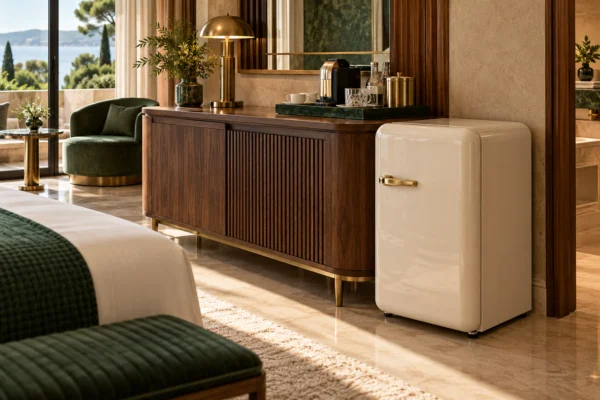
Retro-style minibars offer an alternative for businesses that want to incorporate classic design lines into modern hotel rooms.
These products are ideal for projects where the minibar is considered not only a functional piece of equipment but also a visible part of the room's decor.
OTELSAN The Retro Style Minibar model in the collection features a gross volume of 43 liters, a Peltier cooling system, LED lighting, and electronic thermostat control.
Retro-designed minibars can be a good fit for boutique hotels, concept accommodations, and suites with unique decor.
Comparison of Minibar Refrigeration Technologies
Understanding the fundamental differences in refrigeration technologies when choosing a professional minibar helps determine the product best suited to the business's needs.
| System | Working principle | Key feature | Issues to consider in the election |
|---|---|---|---|
| Absorption System | Cooling cycle powered by thermal energy | No mechanical noise originating from the compressor. | Energy consumption, ambient temperature and ventilation. |
| Inverter Compressor | Controlled compressor technology | The cooling capacity can be managed according to need. | Sound level, energy consumption and temperature performance. |
| Peltier | Thermoelectric cooling | Compressorless design and compact design options. | Ambient temperature, fan noise, and heat dissipation. |
| Platinum Series | Cooling system determined according to the model. | Various capacities and door designs. | Actual technical specifications of the relevant model. |
| Ekovat System | Model-dependent controlled cooling system | Various control and layout options | Energy, noise, and capacity data by model. |
| Retro Series | Peltier technology in the model in question. | Decorative and distinctive design | Room concept, product dimensions and performance |
This comparison is for general informational purposes only. The final product selection should be based on the manufacturer's technical documentation and operating conditions of the relevant model.
What to Consider When Choosing a Hotel Minibar?
Minibar Capacity and Interior Volume
The minibar's capacity should be determined according to the quantity of beverages and snacks planned to be served in the room. A unit that is too small may limit the serving capacity, while an unnecessarily large model may reduce the usable space in the room.
OTELSAN The collection includes various options, from compact wall-mounted models to minibar models with larger interior capacities.
For example, the MWH20 wall-mounted model's technical specifications state a 15-liter capacity, the SM401-TH model's 38-liter gross volume, and the SM601 series' 54-liter gross volume.
When comparing models, it's important to note that gross volume and usable storage volume are not the same concept. The layout of the interior shelves and bottle sizes also affect usable capacity.
Energy Consumption and Operating Costs
Minibars are electrical appliances that can operate for extended periods in hotel rooms. Therefore, energy consumption is an important purchasing criterion, especially in establishments with a large number of rooms.
When evaluating electricity consumption, the product's annual kWh value, capacity, cooling technology, and test conditions should be considered together.
The watt value, which indicates instantaneous power consumption, and the kWh value, which indicates annual energy consumption, are different. A minibar is not more economical simply by looking at its lower watt value.
When comparing the operating costs of different models, using up-to-date energy data determined according to the same test standards yields more reliable results.
Quiet Operation and Guest Comfort
The noise from electrical equipment in hotel rooms, especially at night, can affect guest comfort.
Absorption systems eliminate compressor-related operating noise because they do not have a mechanical compressor. In inverter compressor models, however, the noise level is expected to vary depending on the product design and operating conditions.
Peltier systems do not contain compressors, but fan-cooled structures can generate noise.
Therefore, when searching for a quiet minibar, attention should be paid not only to the technology used, but also to the specified dB value of the model and the installation conditions.
Cooling Performance and Ambient Temperature
The cooling performance of minibars depends on the technology of the device and the ambient temperature. In hotels operating in particularly hot regions, the climate class and operating temperature range of the product become especially important.
For example, while some Peltier models specify a product storage temperature of 6–12°C, certain inverter systems may offer lower temperature ranges.
These values do not apply to all minibars. The conditions specified in the technical documentation of the selected model should be taken as the basis.
It should be remembered that the minibar is designed for cooling beverages. Medications or sensitive products requiring special temperature control should not be stored in standard hotel minibars that have not been verified for their suitability for this purpose.
Minibar Models with Block Doors and Glass Doors
Minibars with Block Doors
Block-door minibars, with their simple door designs that prevent the contents from being visible from the outside, create a cohesive look in hotel rooms.
It can be used especially in projects where it is integrated into furniture and the door surface is considered part of the decoration.
Models with reversible door directions can provide additional flexibility in room layout. However, this feature should not be assumed to be present in every product.
Minibars with Glass Doors
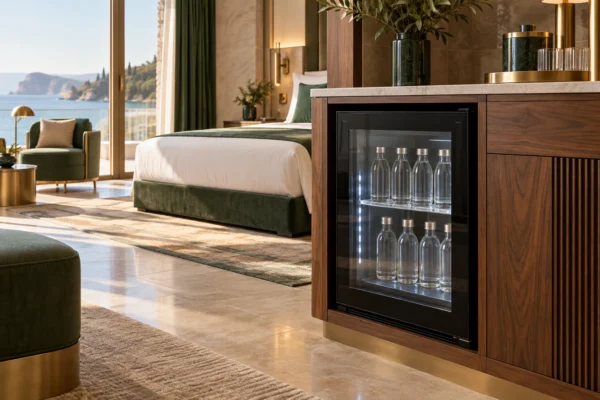
Glass-doored minibars allow the contents of the beverages and snacks inside to be visible. This feature is particularly useful in room concepts where a visual presentation of the minibar contents to the guest is desired.
The design of a glass door can enhance the decorative effect of the product. However, when evaluating energy consumption and temperature performance, the technical specifications of models with glass doors and those with solid doors should be compared separately.
All Black Edition Designs
OTELSAN The product collection includes All Black Edition options for certain absorption and inverter minibar models.
The black body and door design offers an alternative for projects that want to create a cohesive look with modern hotel furniture. Black models with glass doors allow the minibar to be used as a visible design element in the room decor.
Minibar Systems Integrated into Furniture
In hotel rooms, minibars are usually placed in compartments under the desk, inside cabinets, or in specially designed furniture units.
When integrating an appliance into furniture, it's not enough to simply check the external dimensions. The air circulation and heat dissipation required by the cooling system must also be considered.
Why is minibar ventilation important?
Cooling devices transfer heat from the interior to the exterior during operation. Insufficient heat removal can negatively impact cooling performance and increase energy consumption.
Therefore, the cabinet where the minibar will be placed must have the ventilation openings and air intake/outlet arrangement specified by the manufacturer.
Since ventilation requirements vary depending on the product model and cooling system, a single fixed opening size should not be used for all minibars.
Furniture Dimensions and Door Opening Space
When choosing a minibar, the width, depth, and height measurements of the appliance should be compared with the usable space within the furniture.
The door hinge direction, the space required for the door to open fully, the location of the electrical connection, and accessibility to the device during maintenance should also be included in the planning process.
Especially for custom-made hotel furniture, it is recommended to evaluate the technical dimensions of the selected minibar model before furniture manufacturing begins.
Drawer-Type and Custom Placement Minibars
Besides traditional front-opening minibars, drawer-type or wall-mounted systems can also be considered for specific room concepts.
OTELSAN included in the collection SM40-DM Drawer Type MinibarWith its 44-liter gross volume and drawer-style design, it is an option for various storage needs.
Drawer-type models create a usable arrangement within the furniture that allows access by pulling from the front. However, the drawer opening distance, the interior dimensions of the furniture, and the ventilation conditions specified by the manufacturer should be checked.
Wall-mounted models offer alternative installation options beyond traditional floor or furniture-mounted placement. The suitability of the mounting surface and fastening requirements should also be considered for these products.
Ease of Use and Maintenance in Hotel Minibars
Minibar cleaning and maintenance processes, as well as daily use, are an important part of hotel operations.
It is important for the business that housekeeping staff can check the contents of the minibar, clean the shelves, and access products for maintenance when needed.
Depending on the model, features such as removable shelves, LED interior lighting, electronic temperature control, and automatic defrost can provide ease of use.
Since automatic defrost is not available in all minibar models, maintenance planning should be based on the technical specifications of the relevant product.
The manufacturer's recommendations should be used for cleaning minibars; electrical components, door seals, and ventilation areas should be checked according to the usage instructions.
Bulk Minibar Supply in Hotel Projects
In new hotel investments and renovation projects, minibar selection is one of the important stages in the room equipment purchasing process.
In projects with a high number of rooms, it should not be assumed that a single model is suitable for all rooms. Separate capacity and layout options can be considered for standard rooms, suites, and different accommodation units.
When purchasing minibars in bulk, it is recommended that the following criteria be considered together:
- Number of rooms and room types: The project involves determining the required number of minibars and the specific model requirements.
- Cooling technology: Selecting a system that meets the business's expectations regarding noise, temperature, and energy consumption.
- Furniture compatibility: Comparing product dimensions and ventilation requirements with existing or planned furniture.
- Technical infrastructure: Checking electrical connections, voltage requirements, and location conditions.
- Design standard: The door type, color, and appearance should be in harmony with the room's concept.
- Operational planning: Assessment of daily use, cleaning, maintenance, and service needs.
- Delivery schedule: Pre-planning of order quantities, project delivery dates, and logistics requirements.
This approach supports the selection of technically correct products and ensures a more controlled purchasing process.
Frequently Asked Questions About Minibars
What is the difference between a hotel-style minibar and a standard mini-refrigerator?
Hotel-type minibars are offered in various capacities, noise levels, controls, and placement options for storing beverages and suitable snacks in accommodation areas. Standard mini-refrigerators may have different technical specifications and intended uses. Product selection should be made according to the required temperature range and usage conditions.
Which minibar system is the quietest?
Absorption systems eliminate compressor-related operating noise because they do not have a mechanical compressor. However, the actual noise levels of different minibar technologies should be evaluated on a model-by-model basis. Low noise levels can also be found in inverter compressor and Peltier models.
How does minibar energy consumption compare?
When comparing energy consumption, the product's annual kWh value, capacity, cooling technology, and measurement conditions should be considered. Energy savings should not be deduced solely from the watt value or product line name.
Can the hotel minibar be placed inside the cupboard?
Suitable models can be installed inside furniture, provided the manufacturer's installation instructions are followed. Attention should be paid to the device's dimensions, the necessary clearance for air circulation, and maintenance access.
Should I choose a minibar with a glass door or a block door?
Glass-doored models allow the contents inside to be visible, while block-door models offer a simpler exterior appearance. Room design, energy consumption, cleaning requirements, and intended use should all be considered during the selection process.
What minibar capacity is suitable for a hotel project?
The correct capacity depends on the room size, the quantity of items to be placed in the minibar, the shelf arrangement, and the dimensions of the furniture. OTELSAN Since the collection includes models with different capacities, alternatives can be compared according to project needs.
OTELSAN Professional Minibar Solutions
Choosing the right minibar requires considering guest comfort, in-room functionality, and the hotel's daily operations. A holistic approach to cooling technology, capacity, energy consumption, design, and installation requirements is fundamental to a successful product selection.
OTELSANWith its comprehensive product portfolio in the field of hotel equipment and project-oriented procurement approach, it offers various minibar solutions to professional hospitality businesses.
For your new hotel investments, renovation projects, or the minibar needs of your existing facility, you can review our product models; compare technical specifications, select products, and receive a corporate price quote. OTELSAN You can contact with.
Product groups
All groupsBrowse the collection.
Online catalogs ↗
General Information About Professional Hotel Minibars
Hotel-type minibars are professional refrigeration equipment that complements the in-room service concept in accommodation facilities, providing guests with easy access to beverages and appropriate snacks. Minibar models with different capacities, designs, and refrigeration technologies offer alternatives for various usage areas, from standard hotel rooms to suites, from boutique accommodations to large-scale hotel projects.
OTELSAN The minibar collection includes models with absorption systems, Peltier technology, inverter compressors, and Ekovat systems, as well as the Platinum series, retro-designed products, and those with custom placement options. This variety makes it easier for businesses to select minibars that suit their technical requirements and room concepts.
Cooling Technology and Usage Characteristics
The cooling system used in minibar selection can be a determining factor in the device's noise level, energy consumption, and temperature performance. Absorption systems differ in that they do not contain mechanical compressors, inverter systems in their controlled compressor technologies, and Peltier models in their thermoelectric operating principles.
Different products may include features such as LED interior lighting, electronic temperature control, automatic defrost, reversible door direction, and optional locks. Since these features vary depending on the model, the technical specifications of the relevant product should be examined before purchasing.
Choosing a minibar that complements the hotel furniture.
In professional hotel projects, the external dimensions of the minibar, the internal volume of the furniture in which it will be placed, and ventilation requirements must be considered together. For models placed inside cabinets, ensuring adequate air circulation is crucial for the cooling performance and operating conditions of the device.
Minibars with block doors, glass doors, drawer type, and various color options help create design solutions that harmonize with room decor.
Corporate Minibar Supply and Project Solutions
In new hotel investments and renovation projects, it is recommended that minibar requirements be determined in accordance with the number of rooms, intended use, technical infrastructure, and delivery planning. Comparing the capacity, energy consumption, and installation specifications of the products beforehand contributes to a more controlled purchasing process.
OTELSANWith its product portfolio encompassing various minibar technologies, it offers supply solutions tailored to the needs of professional hospitality businesses. You can review models suitable for your business or project requirements, and obtain technical details and corporate price quotes. OTELSAN You can contact with.